
How Soil Biology Fights Weeds Better Than Chemicals
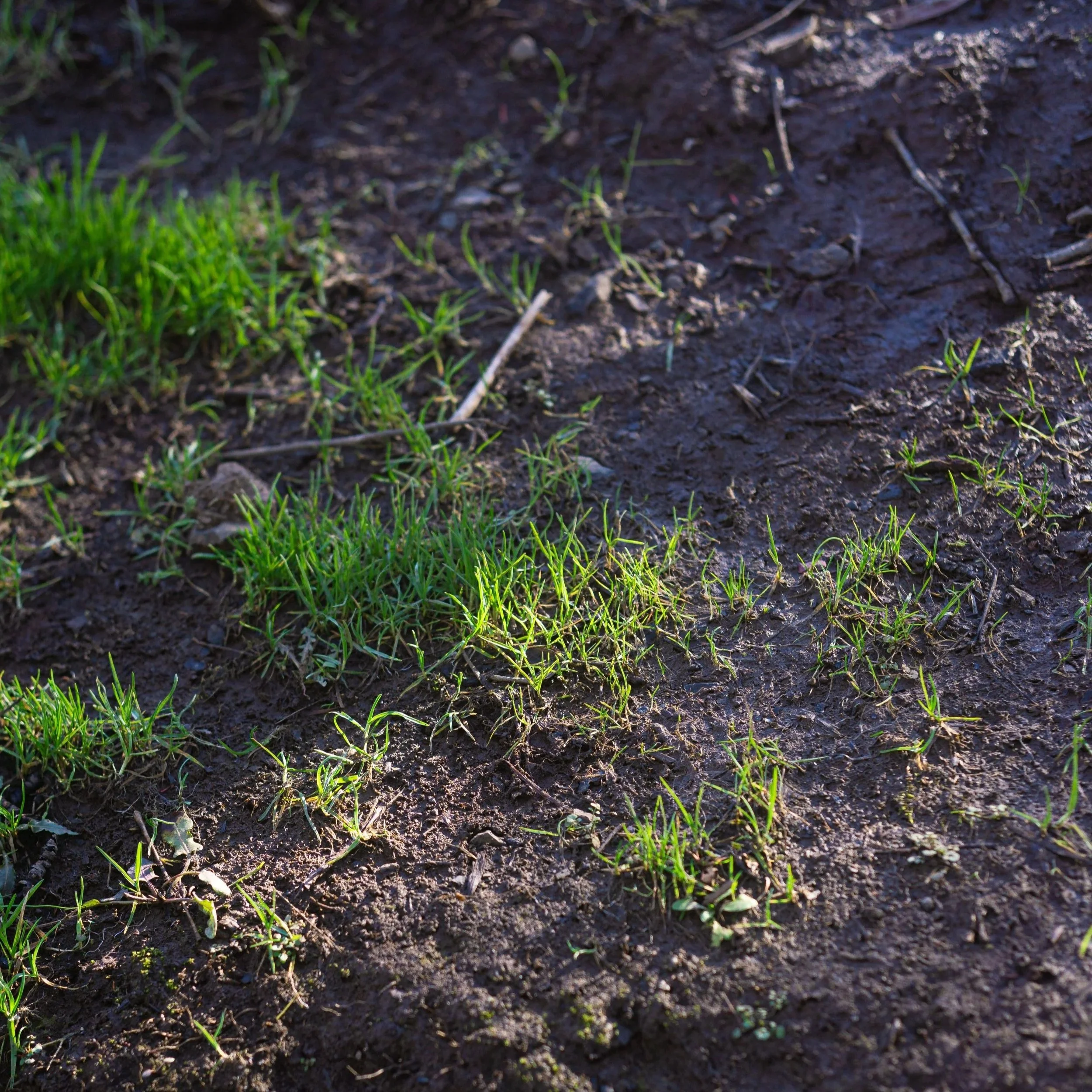
The reason your weed problem keeps coming back isn't bad luck it's that you're treating the symptom while the cause goes untouched underground.
Every spring, it's the same story. You treat the weeds. They die. You feel like you've won. Then six weeks later, there they are again.
It feels like an endless battle. And for most North Texas homeowners using conventional chemical weed control, it is.
Here's what the conventional lawn care industry rarely tells you: weeds aren't your lawn's problem. They're a symptom of it. Specifically, they're a symptom of what's happening in your soil.
Once you understand that, the whole approach to weed control and lawn health changes. And the results change with it.
Why Weeds Keep Coming Back (The Real Reason)
Chemical herbicides are designed to kill weeds. They do that job. But they don't do anything about why the weeds were there in the first place.
Weeds are opportunists. They establish where they can: in thin turf, in compacted soil, in areas where grass is struggling to compete. When you kill a weed chemically and leave the underlying conditions unchanged, you haven't solved the problem. You've just cleared the board for the next weed to fill the same space.
Think of it this way: if you kept getting cracks in your walls, you could keep patching them. Or you could find out why the foundation is shifting. Chemical weed control is the patch. Soil biology is the foundation.
The weeds in your North Texas lawn are communicating something about your soil. Learning to read what they're saying is one of the most useful things a homeowner can do.
What Different Weeds Tell You About Your Soil
This is where it gets genuinely interesting.
Different weeds thrive in different soil conditions. Their presence isn't random, it's diagnostic. Here's what some of the most common North Texas lawn weeds are actually telling you:
Dandelions prefer compacted, low-calcium soil. Their deep taproots are literally breaking up compacted ground, doing a job that healthy soil structure would prevent the need for.
Clover fixes atmospheric nitrogen from the air and thrives in nitrogen-deficient soil. If you have a clover problem, your soil is telling you it's hungry.
Dallisgrass thrives in wet, compacted areas with poor drainage. It loves the heavy clay soils common across Dallas, Plano, and Richardson, especially where water pools.
Crabgrass germinates in thin turf where soil surface temperatures get high and bare soil is exposed. It's telling you your turf density is insufficient to shade it out.
Nutsedge (that fast-growing, lighter green grass-like weed) indicates areas of excess moisture or poor drainage. It thrives in wet spots that healthy turf can't tolerate.
When you treat these weeds chemically, you kill the plant. When you address the soil conditions they're signaling, you eliminate the environment they need to thrive. That's the difference between winning a battle and winning the war.
How Living Soil Creates a Natural Weed Barrier
Healthy soil isn't inert. It's alive, teeming with billions of microorganisms per teaspoon. Bacteria, fungi, protozoa, nematodes, and countless other organisms form a complex ecosystem that performs functions no chemical can replicate.
Here's how that living ecosystem directly suppresses weeds:
Dense, competitive turf. Biologically active soil feeds grass steadily and consistently, producing thick, vigorous turf that physically crowds weeds out. A dense lawn canopy shades the soil surface, preventing weed seeds from getting the light they need to germinate. This is your lawn's most powerful natural weed defense, and it works best if the grass is truly healthy.
Nutrient cycling. Beneficial microbes break down organic matter and release nutrients in plant-available forms exactly when and where grass roots can use them. This produces steady, balanced grass growth that doesn't boom and crash the way synthetically fertilized grass does. Consistent, even growth means consistent canopy coverage, fewer gaps for weeds.
Improved soil structure. Fungal networks and bacterial colonies literally glue clay particles together into larger aggregates, creating pore spaces in what would otherwise be impenetrable clay. Better soil structure means better drainage, better aeration, and better root penetration, making it easier for grass to grow deep and strong, and harder for surface-level weeds to establish.
Allelopathy. Certain beneficial microorganisms and the healthy grass they support produce natural compounds that suppress weed seed germination. This natural allelopathic effect is well-documented in the soil science literature and represents a genuine biological weed suppression mechanism that chemical programs actively destroy.
Outcompeting weeds for resources. Grass growing in rich, biologically active soil develops extensive root systems that capture water and nutrients efficiently from a large soil volume. Weeds trying to establish in that same soil are competing with a much stronger opponent and they typically lose.
What Chemical Weed Control Does to Your Soil Biology
This is the part of the story that conventional lawn care doesn't advertise.
Every time you apply a broad-spectrum herbicide to your lawn, you're not just killing weeds. You're also affecting the soil biology in the treated area. Many herbicides have documented effects on beneficial soil microorganisms, disrupting microbial diversity, reducing fungal networks, and altering the bacterial populations that make nutrients available to grass roots.
Synthetic fertilizers compound the problem. Quick-release nitrogen salts change soil chemistry in ways that favor certain pathogenic organisms over beneficial ones. The "salt index" of synthetic fertilizers can literally dehydrate the soil microorganisms you need.
The result is a progressive decline in soil biology that makes your weed problem worse over time, not better. Less biological activity means less competitive turf, which means more gaps for weeds, which means more herbicide applications, which means less biological activity. It's a cycle that benefits the chemical company, not your lawn.
This is the chemical treadmill we talk about with so many North Texas homeowners. Read more about it and how to break free in our deep dive on soil health here.
The Organic Approach to Weed Control: Prevention Through Soil Health
At Golub Green, our primary weed control strategy is building a lawn so biologically vibrant that weeds don't get a foothold in the first place. Here's what that looks like:
Step 1: Diagnose the soil, not just the lawn. Before we treat weeds, we understand the soil conditions that are creating them. Compaction? pH imbalance? Drainage problems? Nutrient deficiency? The answers change the approach. A dandelion problem treated without addressing the compaction beneath it will be back next season.
Step 2: Feed the soil with organic matter. Our organic fertilization program builds microbial populations and improves soil structure over time. As biological activity increases, turf quality improves, and weed pressure naturally declines. This isn't a quick fix. It's a sustainable system.
Step 3: Maximize turf density. We time fertilization and care practices to support maximum grass growth and canopy closure during the critical windows when weed seeds are germinating. A thick lawn in April and May is your best defense against the entire summer's weed pressure.
Step 4: Proper mowing height. Mowing at the right height for your grass type (3 to 4 inches for St. Augustine; 1 to 2 inches for Bermuda) maintains the shading canopy that prevents weed seed germination. Many homeowners unknowingly mow too short, making their weed problem worse with every cut.
Step 5: Spot treatment as a last resort. When weeds do appear, especially in transitional periods during the first season or two, we use mostly targeted organic treatments that address the specific weed without harming soil biology. We treat the individual problem, not the whole lawn.
What to Expect When You Make the Transition
We want to be honest with you: shifting from chemical weed control to biological prevention takes time. During the first season, you may see some weeds that were previously suppressed by herbicides. This is temporary.
As soil biology rebuilds and turf density increases, the weed population naturally declines. Most homeowners transitioning to our organic program see significant improvement by the end of the first year, and dramatic results by year two. By year three, many of our clients have nearly weed-free lawns maintained with minimal intervention because the system is working naturally.
Compare that to chemical weed control: effective immediately, requiring repeat applications indefinitely, with a lawn that's becoming increasingly dependent on those applications while its underlying health quietly declines.
One approach solves the problem. The other manages it, at a cost, forever.
The Lawn You've Been Chasing Is Underground
The lush, weed-resistant lawn you've always wanted isn't hiding inside a bottle of herbicide. It's hiding in your soil.
Build the right soil conditions (active biology, proper structure, balanced nutrition) and your grass will do most of the weed-fighting itself. That's how nature designed it to work. We just help it along.
If you're ready to stop losing the same battle every season and start building a lawn that wins on its own, we'd love to talk.
Homeowners across Dallas, Richardson, Plano, Frisco, McKinney, Allen, Carrollton, Coppell, and Irving have discovered that the organic, soil-first approach produces better long-term results than anything that comes out of a spray tank. Let us show you what's possible.
Ready to let your soil fight your weeds for you?
Contact Golub Green today for a free consultation and soil assessment.
Schedule Your Free Consultation
Call us at (972) 656-9325 or visit our website to get started.
About Golub Green Golub Green is a family-owned, eco-friendly lawn care company serving Dallas, Richardson, Plano, Frisco, McKinney, Allen, Carrollton, Coppell, Irving, and surrounding North Texas communities. Founded by Scott and Ellyn Golub, we specialize in organic lawn care solutions that build soil health, create beautiful lawns, and keep families safe.
Service Areas: Allen, TX | Carrollton, TX | Coppell, TX | Dallas, TX | Frisco, TX | Irving, TX | McKinney, TX | Plano, TX | Richardson, TX