
From Patchy to Perfect: Real Lawn Transformations in Dallas
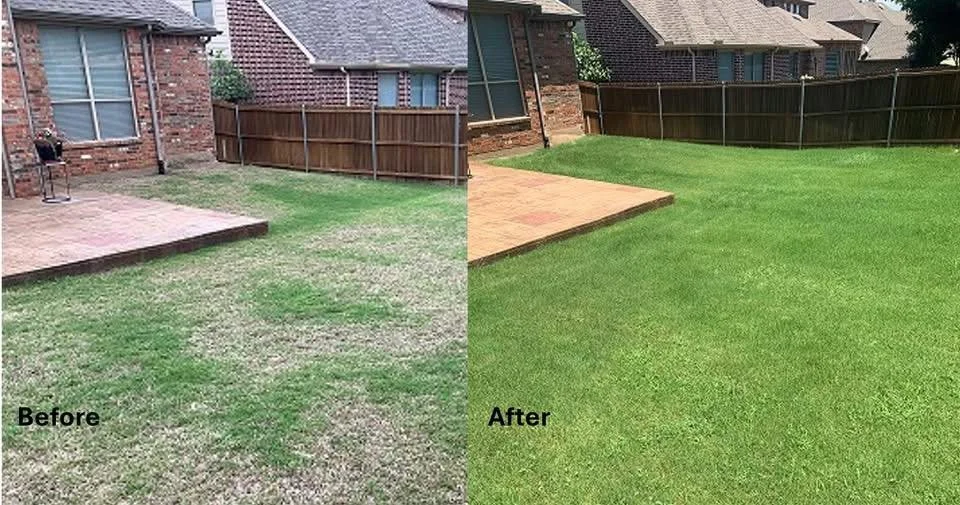
What does a lawn actually look like after a year of eco-friendly, soil-first care? For North Texas homeowners who've spent years fighting weeds, watering constantly, and still ending up with patchy, disappointing turf, the transformations are remarkable—and real.
At Golub Green, we believe in showing our work. Not with filtered photos or cherry-picked results, but with honest stories from real families across Dallas, Richardson, Plano, Frisco, McKinney, Allen, Carrollton, Coppell, and Irving who chose to take a different approach to their lawns.
This is what eco-friendly, organic lawn care actually does.
The Problem Most Dallas Homeowners Know Too Well
Before we get to the transformations, it helps to understand the pattern we see over and over across North Texas lawns. It typically goes like this:
A homeowner has been using a conventional lawn care service, or DIYing with products from the big box store, for years. The lawn looks okay in early spring after fertilization, but by summer it's thin and stressed. There are bare patches near high-traffic areas. Weeds move in quickly. Water bills keep climbing. And every year, the lawn seems just a little worse than the year before.
The root cause, as we discuss in depth in The Hidden Reason Your Dallas Lawn Struggles, is almost always the same: depleted, biologically inactive clay soil that can no longer support healthy grass on its own. Synthetic programs create dependency rather than health. And until you address what's happening underground, no amount of fertilizing or watering will create lasting results.
What the Transformation Actually Looks Like
Here's a composite of the transformations we see most often drawn from the patterns across dozens of North Texas lawns we've worked with:
The Thin, Weedy St. Augustine Lawn
Starting condition: A St. Augustine lawn in a Plano neighborhood that had been treated with synthetic fertilizers for years. The turf was sparse, with large bare patches near the fence line and driveway. Crabgrass and clover had moved into the thin areas. The homeowner was watering five days a week and still seeing stress.
What we found: Severely compacted clay soil with almost no organic matter. Minimal biological activity. Roots barely extending two inches deep.
What changed: We started with a comprehensive soil analysis, then launched a customized organic fertilization program. We adjusted the watering schedule from five days a week to twice weekly, with longer, deeper sessions. We addressed the bare patches by improving the soil conditions rather than just reseeding over depleted soil.
Results at 6 months: Turf density visibly improved. Bare patches filling in naturally. The homeowner cut back to watering twice a week and reported lower stress on the grass despite a hot July.
Results at 12 months: A thick, dark-green lawn that looked fundamentally different from what they started with. Weed pressure dropped significantly as the turf filled in. They were watering less than half as often as when we started.
The Bermuda Lawn Struggling Through Summer
Starting condition: A Bermuda lawn in Richardson that had been beautiful early in the season but always faded badly by August. The homeowner had tried aerating, overwatering, and multiple fertilizer products. Nothing seemed to hold.
What we found: Clay soil with a hard, compacted layer (called a hardpan) about four inches down that was blocking root penetration and water infiltration. Grass roots were trapped in the top two to three inches—completely exposed during summer heat.
What changed: We focused first on biological soil amendment to break down the hardpan layer over time—something synthetic fertilizers can't do. Our organic program introduced the microbial activity needed to loosen and restructure that soil layer. We also adjusted the watering schedule, which you can read more about in our DFW spring watering guide.
Results: Within two growing seasons, roots were penetrating six to eight inches deep. The lawn held its color well into August for the first time the homeowner could remember. Watering requirements decreased substantially as the soil's water retention improved.
The Yard That "Just Couldn't Grow Grass"
Starting condition: A shaded backyard in McKinney where multiple grass varieties had been tried and failed. The homeowner had given up and was considering artificial turf.
What we found: Heavily compacted, alkaline clay soil with a very high thatch layer. The soil had essentially no biological activity. Whatever grass managed to establish couldn't survive the combination of shade, compaction, and nutrient lockup.
What changed: We didn't promise miracles. But we did address the soil: targeted organic amendments to balance pH, thatch-breaking biological inputs, and a patient, consistent program. We also advised on mowing height (keeping it higher in shade) and adjusted watering patterns.
Results: After 18 months of consistent organic care, the backyard had a viable, if not lush, turf established where nothing had grown before.
Common Themes Across Every Transformation
After working with hundreds of North Texas lawns, we've seen the same patterns drive the most dramatic transformations:
Soil first, always. Every meaningful transformation started with understanding the soil and addressing its specific needs—not applying generic treatments.
Patience in the first season. The most noticeable improvements typically happen in months 4–12, not weeks 1–4. Homeowners who stick with the program see compounding results.
Watering changes matter. Almost universally, the lawns that transformed most dramatically also changed their watering habits—deeper and less frequent.
Bare spots signal soil problems. In virtually every case, persistent bare patches traced back to a soil issue, not a grass issue. When we fixed the soil, the grass followed.
The chemical treadmill is real. Lawns that had been on synthetic programs for years often needed an adjustment period as soil biology recovered—but the recovery always came.
Could Your Lawn Be Next?
Transformation stories aren't magic. They're the result of understanding what your lawn actually needs and consistently giving it that. For most North Texas lawns, that means building soil health over time, not chasing quick green-ups that fade within weeks.
If your lawn has bare patches, persistent weeds, summer stress, or just never quite looks the way you'd like it to, start by reading Why Your Lawn Has Bare Spots (And How to Fix Them Naturally). Then give us a call. We'd love to show you what's possible.
Schedule your free lawn consultation today—no pressure, just honest advice. Get a Free Consultation
Call us at (972) 656-9325 or visit golubgreen.com. Serving Dallas, Richardson, Plano, Frisco, McKinney, Allen, Carrollton, Coppell, Irving, and surrounding North Texas communities.