
The Science Behind Natural Lawn Fertilization (And Why It Works Better)
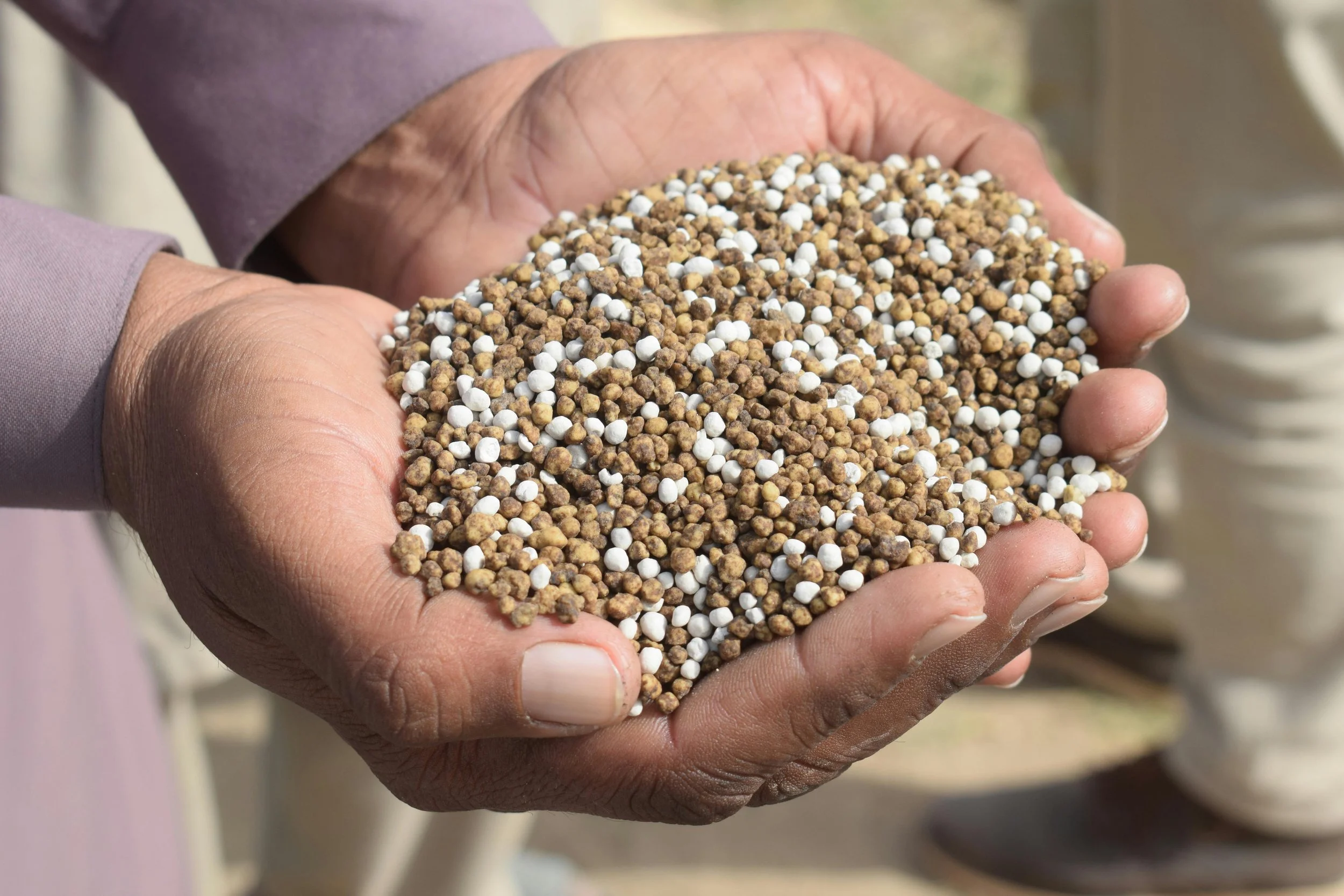
If you've ever poured a bag of bright blue synthetic fertilizer onto your North Texas lawn and marveled at the quick green-up, only to watch your grass yellow and thin out a few months later, you're not alone. That short-lived surge is actually a warning sign, not a success story.
The truth is, most synthetic fertilizers are designed to feed your grass blades, not your soil. And when the soil suffers, everything growing in it eventually suffers too. Natural lawn fertilization works differently. It feeds the living ecosystem beneath your feet and that's exactly why it produces healthier, more resilient results over time.
At Golub Green, we've built our entire approach around this principle: a healthy lawn starts from the ground up. Here's the science behind organic fertilization, why it outperforms synthetic quick fixes, and what it means for your North Texas lawn.
Your Lawn Is More Than Grass—It's a Living Ecosystem
Before we talk fertilizer, let's talk soil. Healthy soil is teeming with billions of microorganisms; such as, bacteria, fungi, earthworms, and other beneficial organisms, that form a complex food web beneath the surface. These microbes break down organic matter, cycle nutrients, aerate the soil, and protect grass roots from disease.
When you understand that, it changes how you think about fertilization. The question isn't just "what does my grass need?" It's "what does my soil biology need to thrive?"
North Texas clay soil presents a unique challenge. It's dense, prone to compaction, and can become nutrient-locked when its biology is out of balance. That's why the right natural lawn food matters so much in our region—it doesn't just deliver nutrients, it rebuilds the living system that makes those nutrients available in the first place.
How Synthetic Fertilizers Work (And Why They Fall Short)
Synthetic fertilizers deliver concentrated doses of nitrogen, phosphorus, and potassium (N-P-K) in fast-dissolving, water-soluble forms.
But here's what's happening beneath the surface:
Water-soluble nutrients wash away quickly with irrigation or rain, contributing to runoff into local waterways like the Trinity River and White Rock Lake.
High nitrogen doses can burn grass roots and disrupt the soil's natural pH balance.
Repeated synthetic applications reduce microbial diversity, weakening the soil ecosystem over time.
Lawns become dependent on the next application—a cycle that requires more product, more cost, and more environmental impact.
We cover the runoff problem in depth in our post How to Maintain a Green Lawn in North Texas Without Polluting Texas Waterways—but the short version is this: synthetic fertilizers aren't just hard on your lawn's long-term health, they're hard on the entire North Texas environment.
How Natural Lawn Fertilizers Work
Organic fertilizer Texas homeowners can rely on works through an entirely different mechanism. Rather than dumping concentrated chemicals directly onto grass roots, natural fertilizers feed soil biology first—and soil biology feeds the grass.
Here's the process:
1. Organic Matter Feeds Microbial Life
Natural fertilizers derived from sources like composted plant material, bone meal, kelp, and feather meal, introduce organic carbon into the soil. Microbes consume this carbon and, in the process, mineralize nutrients like nitrogen and phosphorus into plant-available forms.
This is a natural cycle that's been happening in healthy ecosystems for millions of years. When you fertilize organically, you're not bypassing this cycle, you're supporting it.
2. Slow-Release Fertilizer Benefits: Steady Nutrition Over Time
One of the most important slow-release fertilizer benefits is timing. Because organic nutrients must be processed by soil microbes before becoming plant-available, they're released gradually (often over weeks or months).
This means:
No nutrient spikes that burn roots or force rapid, weak growth
No sudden empty periods where your lawn goes hungry between applications
Nutrients remain in the soil longer, reducing waste and runoff
Grass builds stronger roots because it has to reach for nutrients rather than having them flooding the system
3. Improved Soil Structure Over Time
As organic matter breaks down, it improves soil structure in ways synthetic fertilizers simply can't. Specifically, organic fertilization:
Increases the soil's water-holding capacity, reducing the need for irrigation
Loosens compacted clay soil, allowing roots to penetrate deeper
Builds a sponge-like texture that holds nutrients in place rather than letting them leach away
Encourages earthworm activity, which naturally aerates and enriches the soil
Over a season or two of consistent organic treatment, North Texas homeowners often find their lawns need less water, develop fewer bare patches, and resist summer heat stress much more effectively.
What Natural Lawn Food Is Actually Made Of
"Organic fertilizer" isn't a single product, it's a category of ingredients derived from natural, biological sources. At Golub Green, our natural lawn food blends are formulated specifically for North Texas soil conditions and may include:
Composted plant and animal materials: rich in carbon, nitrogen, and trace minerals
Feather meal or bone meal: slow-releasing nitrogen and phosphorus
Kelp and seaweed extracts: micronutrients and natural growth hormones that improve stress tolerance
Humic and fulvic acids: compounds that improve nutrient uptake and soil structure
Mycorrhizal fungi: beneficial fungi that form symbiotic relationships with grass roots, dramatically expanding their ability to absorb water and nutrients
Together, these ingredients don't just feed the grass. They build a living soil ecosystem that sustains your lawn for seasons to come.
Organic Fertilizer Texas Lawns: What Makes Our Region Different
North Texas presents a unique set of challenges that make organic fertilization especially valuable:
Heavy Clay Soil
Dallas-area clay soil compacts easily, limiting water penetration and root depth. Organic matter breaks down this density over time, creating a more open, breathable soil profile that synthetic products simply can't replicate.
Extreme Heat and Drought
Texas summers are brutal. When soil biology is healthy, lawns naturally become more drought-tolerant. Since their root systems are deeper, their soil holds more moisture, and the microbial community helps regulate plant stress responses.
Synthetic fertilizers, by contrast, can actually worsen heat stress. High-nitrogen synthetic products push rapid blade growth during summer, which increases the lawn's water demand at exactly the wrong time.
Year-Round Growing Season
Warm-season grasses like Bermuda and St. Augustine stay active most of the year in North Texas, which means they need sustained nutrition, not just seasonal spikes. The gradual, consistent feeding of organic fertilizers is a natural match for this extended growing window.
For specific timing guidance, read our post The Best Times to Fertilize Your Lawn in North Texas (Without Harming the Environment).
Natural vs. Synthetic: A Side-by-Side Look
Still weighing the difference? Here's a straightforward comparison:
What They Feed: Synthetic – Grass blades (surface) | Organic – Soil biology → then grass
Nutrient Release: Synthetic – Fast (days) | Organic – Slow (weeks to months)
Runoff Risk: Synthetic – High | Organic – Low
Soil Health Impact: Synthetic – Degrades over time | Organic – Improves over time
Root Development: Synthetic – Shallow (grass fed, not built) | Organic – Deep (roots reach for nutrients)
Environmental Impact: Synthetic – High – chemical runoff | Organic – Low – natural decomposition
Safe for Kids & Pets: Synthetic – Restricted window after application | Organic – Safe immediately after application
Long-Term Cost: Synthetic – Higher (dependency cycle) | Organic – Lower (healthier soil = less needed)
The Long Game: Why Organic Lawns Get Better Every Year
Here's something synthetic fertilizers can never deliver: compounding returns. With organic fertilization, every application improves the baseline. Soil organic matter builds up. Microbial populations grow more diverse and robust. Root systems deepen. Water retention improves.
By your second or third year of consistent organic care, your lawn is actively becoming easier to maintain, not harder. The soil does more of the work, and you need less product to get the same (or better) results.
That's the opposite of what happens with synthetic dependency, where soil health degrades over time and lawns require ever-increasing inputs to look the same.
Organic Fertilization and Pest Prevention: The Hidden Benefit
There's a reason healthy lawns resist pests better than struggling ones. When soil biology is robust, grass develops stronger, deeper roots and denser turf coverage. And dense, vigorous turf simply doesn't leave room for weeds to establish or pests to take hold.
This is one reason we always recommend organic fertilization as the foundation of a complete lawn care strategy. To see how this connects with pest prevention, check out our post Pet-Safe Weed Control Solutions for Your Backyard in the Texas Heat.
What to Expect When You Switch to Natural Lawn Fertilization
Switching from synthetic to organic isn't a light-switch moment, it's a transition. Here's what most North Texas homeowners experience:
Weeks 1–4: Adjustment Period
Your lawn may look similar to how it did before. The soil biology is waking up, microbes are establishing, and the first organic applications are beginning to break down. This is normal and temporary.
Months 2–3: Visible Improvement
Soil texture begins to improve. You'll likely notice your lawn recovering from stress more quickly, holding color longer after heat, and requiring slightly less water to maintain.
Season 2 and Beyond: The Compounding Effect
This is where organic fertilization really shines. Soil organic matter has built up, root systems are deeper, and your lawn is noticeably more resilient. Neighbors will start asking what you're doing differently.
How Golub Green Puts the Science to Work in Your Yard
Our organic lawn care program for North Texas homeowners isn't just about swapping one bag of fertilizer for another. It's a complete, soil-first approach that includes:
Soil assessment to understand your lawn's starting point
Custom organic fertilizer blends formulated for North Texas grass types and clay soil
Seasonal application timing calibrated to your lawn's active growth cycles
Integrated care that pairs fertilization with water-wise practices, aeration support, and organic pest management
We serve homeowners across Dallas, Plano, Frisco, McKinney, Allen, Richardson, Coppell, Carrollton, Irving, and the surrounding North Texas area. Whether you're starting from scratch or transitioning away from a synthetic program, we'll build a customized plan that gives your soil—and your grass—exactly what they need.
Ready to Feed Your Lawn the Right Way?
The science is clear: natural lawn fertilization doesn't just work, it works better. Better for your grass. Better for your soil. Better for your family, your pets, and the North Texas environment we all share.
At Golub Green, we're ready to put that science to work in your yard. Contact us today for a free consultation and soil assessment, and let's build a lawn that gets stronger every season.